




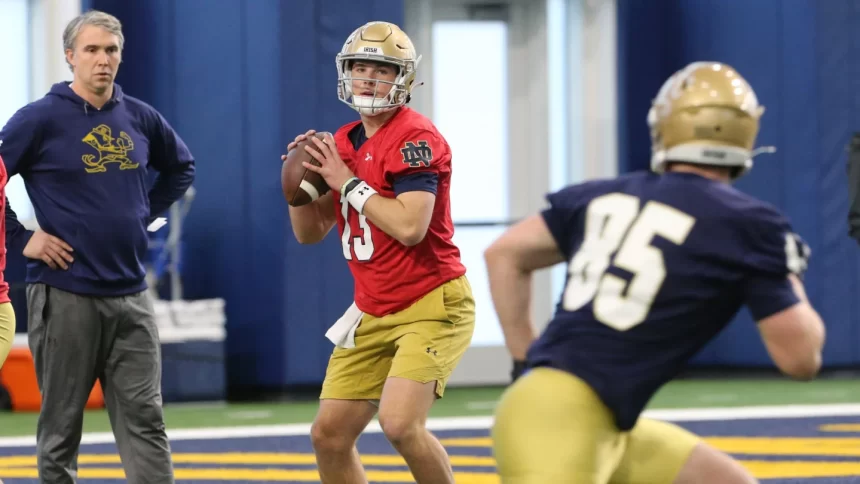
In locker rooms from Mississippi to Minnesota, a new name is making its way into chalk talks and coaching clinics: Marcus Riley. But Riley isn’t your typical football coach. He doesn’t just design plays—he designs futures.
Once a promising collegiate linebacker who walked away from a pro career to teach, Riley is now the architect of a nationally recognized movement to reform high school football—not just to win games, but to build character, academic excellence, and mental resilience.
At 38, Coach Marcus Riley is transforming America’s most beloved high school sport into a vehicle for social mobility, educational equity, and leadership development, one team at a time.
“The game is the hook,” he says. “But the goal is to raise better men, stronger minds, and tighter communities.”
From Field Star to Field General
Born and raised in rural Alabama, Marcus Riley grew up in a football-obsessed town. By 17, he was a four-star recruit with scholarship offers from SEC powerhouses. But a season-ending ACL tear his sophomore year at Auburn—and the death of a teammate by suicide—shook him to the core.
“I realized football can build you up or break you down. It’s what happens off the field that determines which way it goes.”
After earning degrees in sociology and education, Riley took an unlikely route: becoming a high school teacher and assistant coach in a struggling inner-city school in Birmingham, where graduation rates were under 60%.
That’s where he saw his true calling—not just coaching athletes, but coaching young men through life.
The Riley Method: Football as Holistic Education
By 2018, Riley had taken over as head coach at Booker T. Washington High, and within three years, he’d turned the program into a national model for player development—academic, athletic, and emotional.
His “Riley Method” combines:
- Daily Leadership Circles: 20-minute pre-practice sessions on topics like conflict resolution, mental health, and decision-making.
- The Scholar-Athlete Contract: Every player must maintain a 3.0 GPA or attend tutoring sessions twice a week.
- Mental Fitness Mondays: Sessions with sports psychologists, guided journaling, and breathing exercises.
- College-Ready Bootcamps: SAT prep, financial literacy training, and weekly guest lectures from Black professionals in law, tech, and medicine.
“You can be a five-star athlete, but if you can’t lead in a locker room, focus in a classroom, or own your emotions—you won’t succeed at the next level,” Riley says.
Results on and off the Field
In four years under Riley’s leadership:
- Team GPA rose from 2.1 to 3.4
- 100% of seniors graduated, with 86% enrolling in college or vocational programs
- Juvenile arrests among players dropped by 78%
- The school’s football program went from 1–9 to back-to-back state semifinalists
- More than 25 players have earned scholarships, many as academic recruits
Parents describe Riley as “more mentor than coach.” Players call him “Pops.”
Scaling the Vision: Project GRIDIRON
In 2022, Riley founded Project GRIDIRON (Growth, Resilience, Identity, Discipline, Opportunity, and Networks)—a nonprofit aimed at bringing his model to high schools across the country, especially in underserved rural and urban areas.
Backed by grants from the Gates Foundation and support from the NFL’s Inspire Change initiative, Project GRIDIRON now partners with:
- 120 schools in 14 states
- State education departments to integrate leadership modules into athletic programs
- Former pro athletes, many of whom serve as regional mentors and ambassadors
GRIDIRON offers:
- Digital toolkits for coaches
- Online player leadership courses
- Mental health resources for teams
- A summer leadership camp that draws 500+ student-athletes each year
The Cultural Shift: Football With Purpose
Riley’s work is sparking a cultural rethinking of high school football’s role in American life.
“We’re moving from ‘win at all costs’ to ‘grow at all costs,’” he explains. “If the scoreboard is the only thing that matters, we’re failing our kids.”
He’s also challenging outdated ideas of masculinity in locker rooms.
- Homophobia, bullying, and toxic aggression are actively addressed
- Coaches are trained in trauma-informed practices
- Players are encouraged to seek therapy without shame
As Riley puts it:
“If a player can bench 300 pounds but can’t express his emotions, that’s not strength—that’s a liability.”
Recognition and Reach
Coach Marcus Riley has been featured in:
- Sports Illustrated – “The Future of Football Is Here”
- TIME – “100 Most Influential Voices in Youth Education”
- ESPN’s E:60 – A documentary on Riley’s first team, “Friday Nights, Future Brights”
He now travels the country speaking at coaching clinics, educational conferences, and youth justice forums. In 2024, he was named a special advisor to the Department of Education on Student-Athlete Success.
Challenges and Critics
Riley’s approach hasn’t been universally welcomed. Some traditionalists argue that he’s “softening” football or turning coaches into social workers.
Others push back on the academic requirements, claiming they limit participation for struggling students.
Riley’s response?
“We don’t lower the bar. We build the ladder. Every young man deserves the chance to climb.”
He acknowledges the model requires time, funding, and staff commitment. That’s why Project GRIDIRON includes training for administrators and seeks to embed change at the district level, not just the locker room.
Looking Ahead: A National Framework
In 2025, Riley is working with the NCAA and the National Federation of State High School Associations (NFHS) to propose:
- National standards for student-athlete well-being
- Mental health certification for high school coaches
- Equity-focused funding for Title I school sports programs
He’s also launching The Riley Institute for Sports & Society, a think tank and training center based in Atlanta that will research and pilot athletic programs that drive upward mobility.
“Sports should be the great equalizer. But that only happens when we build the system with intention.”
Conclusion: Coaching for Life, Not Just the Game
Coach Marcus Riley isn’t just coaching football. He’s coaching a movement. A movement that believes the locker room can be a classroom. That games can be gateways to generational change. That every athlete—no matter their zip code—deserves more than a helmet and a hope.
In a nation divided by opportunity, he’s using the unifying power of football to raise a generation that’s stronger, smarter, and more compassionate than the last.
“At the end of the day,” he says, “it’s not about rings or rankings. It’s about whether these kids leave our program ready to lead—with their heads high and hearts open.”