




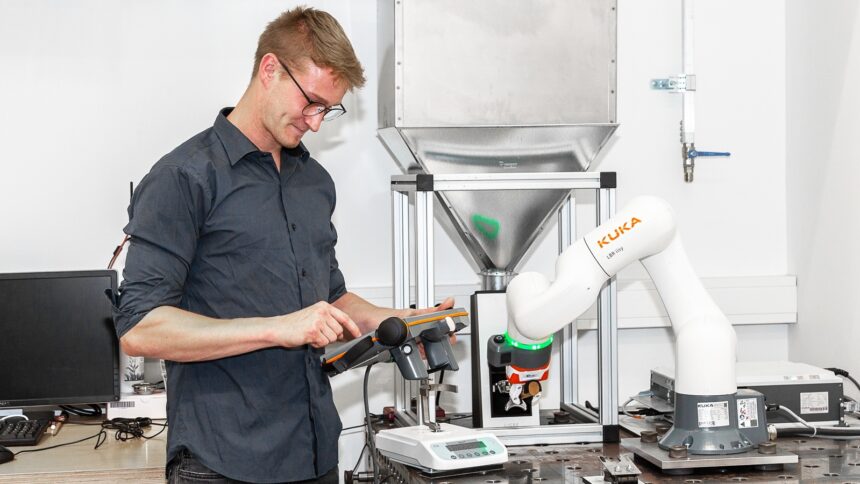
Jorgen Pedersen, a seasoned venture capitalist and pioneer in industrial robotics, has been named the incoming CEO of the ARM Institute, a robotics innovation hub focused on boosting U.S. advanced manufacturing. His appointment marks a new chapter for the organization—a shift toward stronger industry alignment, capital efficiency, and commercialization.
From Robotics Investor to Manufacturing Leader
Pedersen brings nearly two decades of experience backing robotics startups through his firm, Maple Ventures. His portfolio includes early-stage investments in autonomous mobile robots, factory automation, and AI-driven assembly technologies now used by major manufacturers. He also played leadership roles at technology platforms that bridge corporate R&D with emerging robotics firms.
This background positions him well to accelerate ARM Institute’s mission: to unite academic research, corporate capabilities, and public support to develop scalable robotics solutions for American factories.
A Strategic Agenda for U.S. Manufacturing
Pedersen’s vision centers on three core goals:
- Strategic Alignment: He aims to refocus ARM’s research projects around critical manufacturing sectors—semiconductors, aerospace, automotive, and heavy machinery—ensuring resources serve real-world demands.
- Investment Readiness: With his VC background, Pedersen plans to optimize funding pipelines so that technologies mature from prototypes to market-ready systems.
- Ecosystem Cohesion: Drawing on industry relationships, he will deepen collaboration among universities, OEMs, integrators, and financiers to bridge innovation gaps.
His ambition is for ARM to become the “go-to engine” for practical robotics innovation in North America.
Leading a Refined Innovation Engine
Under Pedersen’s leadership, ARM Institute will refine its project selection process, introducing tougher criteria—market need validation, scale potential, ROI promise. Success will be measured by commercial adoption, job creation, and U.S. factory deployment.
He also proposes creating an Innovation Accelerator, offering pilot funding, shared testbeds, and mentorship to startups—complemented by manufacturing grants and trial credits.
Bridging Research and Reality
Pedersen believes close industrial engagement is essential. He plans to embed industry advisors into technical review boards and invite manufacturers to co‑sponsor robotics trials at real factories. This “factory floor feedback loop” is meant to both de-risk innovations and accelerate adoption.
He also sees potential in modular systems—robotic cells that can be customized for specific production lines, reducing integration hurdles and showing faster ROI to manufacturers.
Strengthening Pathways and Policies
A second pillar of his strategy is workforce readiness. Pedersen advocates for robotics training programs in vocational schools, as well as industry certification standards to ready technicians and engineers for advanced automation roles.
On the policy front, he will advocate for incentives—tax credits, accelerated depreciation, and R&D grants—to encourage manufacturers to invest in robotics.
Culture of Agility and Accountability
Pedersen frames ARM’s future as a tight circle of high-impact projects supported by agile leadership. Under his guidance, the institute will adopt performance milestones, quarterly reviews, and transparent dashboards tracking innovation and adoption.
He also emphasizes culture building—encouraging continuous learning among staff and partners, celebrating success, and cultivating risk-tolerant experimentation.
Reaction from Stakeholders
ARM’s board and founding partners have hailed the appointment. They cite Pedersen’s rare blend of industry insight, investment discipline, and commercial track record as essential to scaling U.S. advanced manufacturing.
Academics and startups see hope in his promise to simplify funding, accelerate projects, and deliver real-world outcomes that match technical sophistication.
🗞️ Article 2: “Robotics VC Maestro Jorgen Pedersen Set to Transform ARM Institute into Commercial Powerhouse”
COLUMBUS —
The ARM Institute has announced Jorgen Pedersen as its next CEO, signaling a movement from academic excellence toward industrial impact. The organization hopes his startup-friendly approach and capital market knowledge will help convert robotics research into factory-scale deployment.
A Career Built on Scaling Robotics Tech
Pedersen’s venture career began with seed funding for automation startups that later grew into industry leaders supplying logistics and assembly solutions. He also co-led investment rounds for robotic vision systems—now standard in quality inspection.
A vocal advocate for entrepreneurial intervention in manufacturing, Pedersen’s hiring aligns with ARM’s goal of producing practical technologies that factories adopt and retain.
Strategic Pivot Toward Commercialization
Traditionally a grant-driven institution, ARM under Pedersen looks to refine its structure:
- Tiered Project Funding: Start with small grants; fund scaling only when milestones are met.
- Sector-First Approach: Concentrate on aerospace, automotive, electronics, food processing—industries ripe for automation.
- Private Sector Mandate: Require industrial partnerships or investment commitments before approving funding.
This reorientation aims to ensure faster project cycles and a higher path to profitable deployment.
Incentives Over Innovation Alone
Pedersen plans to formalize commercial metrics for every project: partner acquisition, pilot investment, job creation. Research teams will work alongside venture scouts and integrators to prepare IP and systems for financing or acquisition.
A network of corporate partners will offer test labs to validate real-world performance, widening manufacturing confidence in robot-driven solutions.
Workforce Innovation as Core
Robotics adoption demands a skilled workforce. Pedersen proposes apprenticeship models linking vocational colleges with manufacturers, plus continuing-education modules—teaching robotics setup, troubleshooting, and optimization.
These efforts aim not just to digitize factory floors, but to empower a new class of robotics-fluent technicians.
Policy and Public Commitment
Pedersen will also use his influence to secure federal support—lobbying for robotics tax incentives, expanded R&D funding, and deployment grant programs. He argues that global competition demands swift modernization of domestic factories.
Through ARM, he aims to partner with federal agencies and state governments to pilot robotics adoption zones and offer capacity-building workshops nationwide.
Governance and Metrics
To raise accountability, ARM will implement quarterly reviews, cash‑flow tracking, commercial KPIs, and public innovation progress dashboards. Pedersen emphasizes transparency to reassure funders and accelerate investment cycles.
Project teams will present progress in “go/no‑go” meetings, ensuring alignment with commercial readiness and industrial viability.
Anticipating Real-World Impact
Manufacturers and robotics startups applaud the shift. Smaller vendors see ARM becoming more responsive; larger industrials expect access to proven solutions and vetted partners. Over time, Pedersen envisions manufacturing districts that become robotics-ready ecosystems.
🧭 Final Overview
- Jorgen Pedersen joins ARM Institute as CEO, shifting mission toward real‑world robotics deployment.
- Strategic focus: industry‑centric projects, commercialization discipline, and robotics ecosystems.
- Action plan: pilot labs, workforce apprenticeships, investment metrics, and policy advocacy.
- Culture: agile, transparent, success‑oriented, risk‑tolerant.
- Potential outcomes: faster deployment, U.S. factory modernization, jobs empowered by robotics, and a replicated innovation model nationwide.