




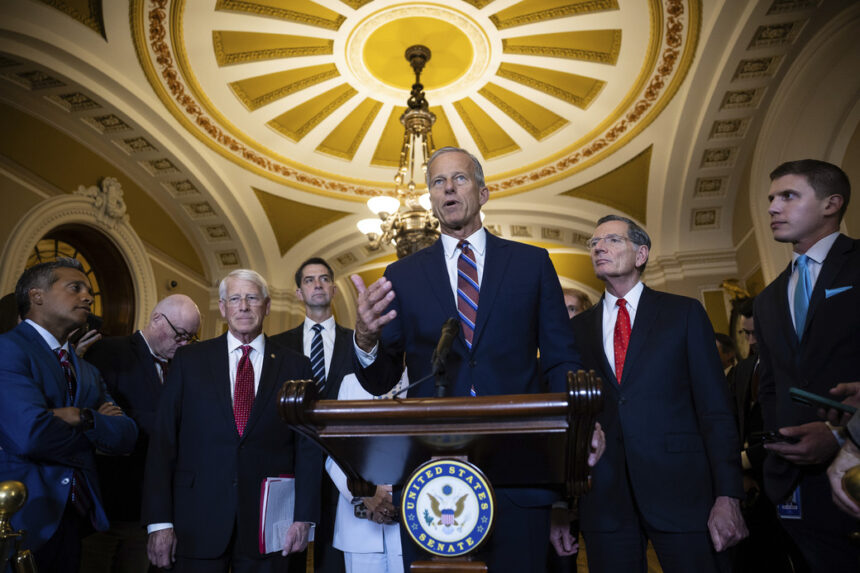
The Senate is usually known for being slow-moving because it was designed to be careful. However, things went fast this week when senators gave the thumbs-up to 48 of President Trump’s picks all at once. The vote was close, 51–47, and mostly split along party lines. This move got people talking in D.C. Since the Senate is known for sticking to old ways, this was a big deal.
Usually, the Senate takes its job of advising and approving people seriously. Each person picked, whether it’s for an ambassador, a deputy secretary, or a top job in a department, goes through hearings, talks, and a vote. This can take weeks or even months. It’s often slow, but the idea is to make sure the people running things are right for the job. But earlier in the year, Senator John Thune pushed a rule that let the Senate OK many people at once, if a committee had already checked them out. The reason was that the government had too many open jobs, and the Senate was taking too long. So, instead of vote after vote, there was just one vote, and 48 people were hired.
Lots of names are well-known. Kimberly Guilfoyle, a Trump supporter who’s been on TV a lot, is going to Greece as an ambassador. Callista Gingrich, whose husband, Newt Gingrich, used to be Speaker of the House, was OK’d as ambassador to Switzerland and Liechtenstein. But most of the people weren’t famous. They were undersecretaries, deputy heads, and senior people who don’t make the news but keep the government going. They handle budgets, programs, and policies. Without them, things stop. With them, things go.
Republicans said this change made sense. They said everyone had already been checked out by committees, and some even had support from both parties. Why waste time on separate votes when the government needs people now? One senator put it simply: You can’t run a country with half the jobs open. This makes sense. It’s faster. For the Trump White House, this was good news. People had said they were late in filling jobs, but now many positions are filled, from embassies to federal agencies.
Democrats didn’t like it. Chuck Schumer said it was a shortcut that makes it harder to keep an eye on things. He said the Senate was turning into a rubber stamp. Democrats think this isn’t about Trump, only it’s about what happens next. If one side does this, the other will, too. If Democrats win power again, will they push through dozens of people in one vote? Maybe. And once you break rules like these, it’s hard to go back. This isn’t how the Senate should work, Schumer said. It’s about being careful, not fast.
The big question is whether it’s better to be fast or careful. Do you fill jobs quickly, even if it means watching them less closely? Or do you take your time, knowing that watching them closely helps prevent mistakes? The Senate has mostly been patient. But this week showed that patience is wearing thin. And once you start taking shortcuts in D.C., they tend to stick around. Even people who complain about it now might use them later if it helps them. That’s how things change not all at once, but bit by bit.
For Trump, it helps now. He has more ambassadors, managers, and leaders. Agencies that were struggling can now move forward. That’s a plus. But there are risks. If one of these people messes up or causes problems, people will blame the Senate for rushing. They’ll say this is what happens when you care more about speed than watching closely. What seems good now might seem like a mistake later.
This wasn’t a big fight over the Supreme Court or a Cabinet pick. It wasn’t huge news. But it still matters. It shows how Washington is changing. Slowly, old ways are being dropped so that things become faster. Some think this means the Senate can still get things done in a difficult time. Others worry that the Senate is losing what made it special.
In the end, 48 people are starting new jobs. The government has a few more people working. But the way it happened raises questions. Will future Senates do this all the time? Will people be sure that everyone is being checked out properly? Or has the Senate chosen speed over safety? One thing’s for sure: Washington has changed, and so has the Senate.