




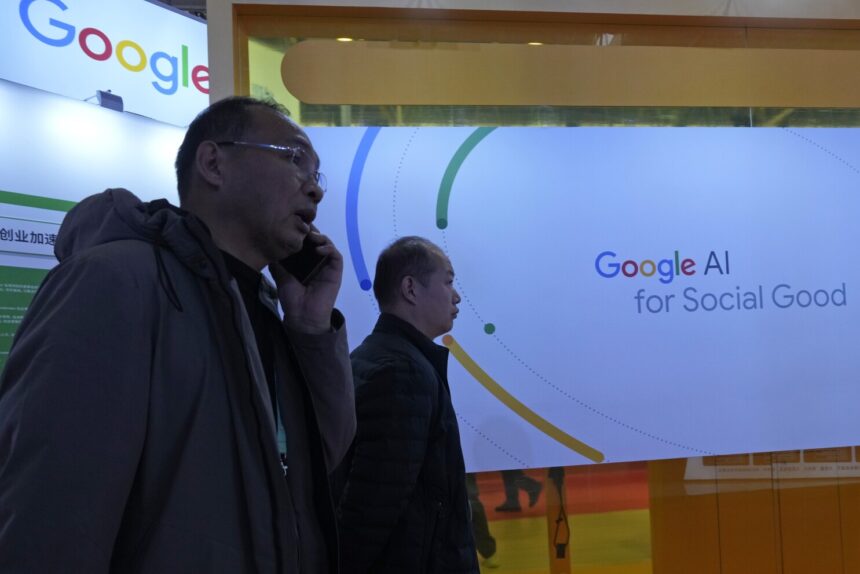
This might seem like a small thing, but it’s actually pretty big because it happened as the U.S. and China started talking trade again. That hints that politics were involved.
For months, Chinese officials looked into whether Google had too much power in the ad market and if they were playing fair. Google has run into problems like this in the U.S. and Europe, but it feels like a bigger deal when China’s doing it. Tech isn’t just about search or ads. It’s about who’s in charge of information, who’s winning in AI, and who’s ahead in the global tech race.
So, why drop the case now? Some think it’s like sending a friendly signal. Ending the review might mean China wants to get along with the U.S., at least for the moment. It’s like a smart move in talks. The U.S. has been pushing China hard on trade and tech, so this could help calm things down.
But China’s still paying close attention to tech rules. Google might be happy, but now Nvidia is in the spotlight. China needs Nvidia’s chips for AI. Since the U.S. is limiting chip exports, China is showing that chips are what they really care about. Letting Google off the hook while keeping an eye on Nvidia sends a pretty clear message.
This is good news for Google. Even if their search engine is blocked in China, they still make money from ads and cloud services there. The investigation hurt their business and how people saw them. When it ended, Google’s stock went up a bit. That shows the market likes things to be stable.
What does this mean for the U.S. and China? Trade has been tough, with tariffs, limits, and tech troubles. American companies want better access to China’s market. Chinese companies want fewer limits when trading with U.S. tech companies. They both know they need each other. Moves like this can help start conversations.
Things are changing a little. At Google in California, engineers have one less thing on their minds. In Shenzhen, chip people are likely expecting more attention as Nvidia’s situation gets tricky. People might not notice that Google’s still not in China, and phone prices aren’t dropping. But these policy changes do cause changes. Over time, they change how the world’s two biggest economies work together.
Some people disagree and say not to read too much into it. They think it’s just for show and doesn’t solve the real problems: who controls AI, supply chains, and the rules of the internet. And they have a point. Ending one investigation doesn’t erase years of not trusting each other. But in global politics, small things can matter.
The politics here are worth thinking about. The U.S. will probably say this proves that pressuring China is the right thing to do. China will say they’re just following the rules. But everyone knows there’s more going on. Things like this always have a political side. Strategy, planning, and a bit of showing off are always part of the decision.
Both countries are getting tired of fighting. Businesses are stuck between tariffs, export problems, and sudden policy changes. Investors don’t like the uncertainty. People notice when prices go up or when jobs in global trade are at risk. So even a small thing like ending Google’s case could give some hope that things won’t get worse.
But hope can disappear fast. China might’ve solved one problem, but they’re watching something else now. By focusing on Nvidia and chips, China is making a point. Chips are important. Whoever controls them controls the future of tech. And that’s where this competition is going.
Right now, Google’s not the main focus. Nvidia is. The U.S. and China are still talking, each trying to figure out what they’re willing to give up and what they need to protect. It’s not a solution. It’s not peace. It’s just the next part of the story.
Because tech isn’t just tech anymore. It’s connected to politics, trade, and power. And China’s quiet news about closing one investigation was noticed everywhere.