




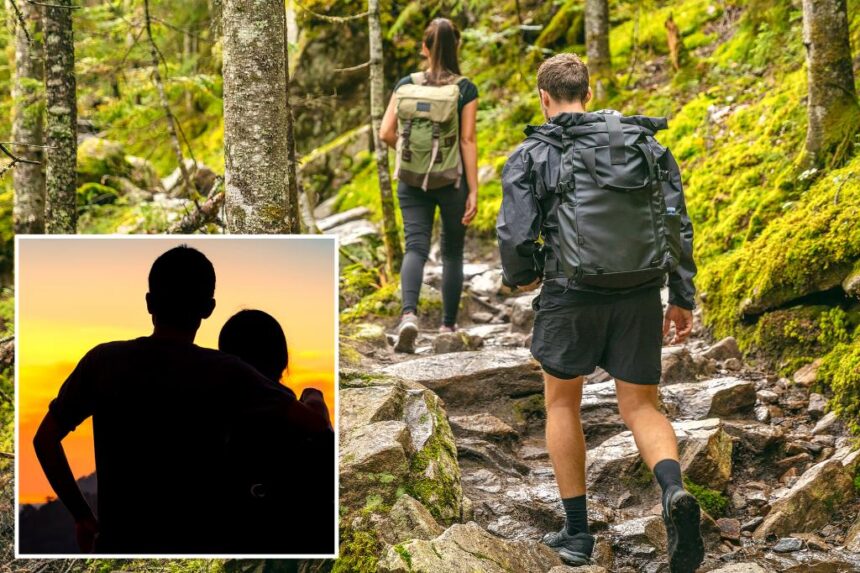

The last appointment experts advice? Make a walk!
The first dates that imply an activity such as walking or taking a cooking class have 25% more likely to lead to a second date than to meet in a bar, restaurants or coffee shops, the Tawkify pairing company found.
Hiking, especially, has an impressive 50%success rate, according to the data obtained from the millions of singles of the company and hundreds of thousands of parties that change the first quarter of 2025.
“The increase in the popularity of the activity dates reflects the research that suggests who participates in activities together are happier, stronger and more connected to each other,” said Brie Temple, CCO and “Chief Matchmaker” in Tawkify.
“On the contrary, bar dates are usually noisy distraction environments that are not the most conducive to authentic interactions and know some at a deeper level,” Temple added.
Anything that puts people and somewhat new experimentation in a light and casual environment is preferred, such as visiting a museum, walking through botanical gardens, attending a concert or taking a bite in a food truck, experts sing.
Researchers have discovered that couples who constantly try new things together have been feelings of romantic satisfaction. A series of published studies found people who saw their partners as sources of information, emotion and new experiences wanted them more in 2019.
The popularity and success of the trend varies between generations, Tawkify found.
The Boomers, born between 1946 and 1964, are less interested in going to a bar for their first date and the greatest interest in the activity dates, according to the Tawkify CEO Chris Kumar, while millennials and Gen Xers are open to virtual dates.
And Gen Zers, those born between 1997 and 2012, see the slightest success after the first dates in the bar compared to other generations.
This could be linked to its early adoption of the “curious sober” movement.
Kumar explained: “More single look for free forms of alcohol to connect and create a space for authentic conversation and emotional chemistry to grow organically.”